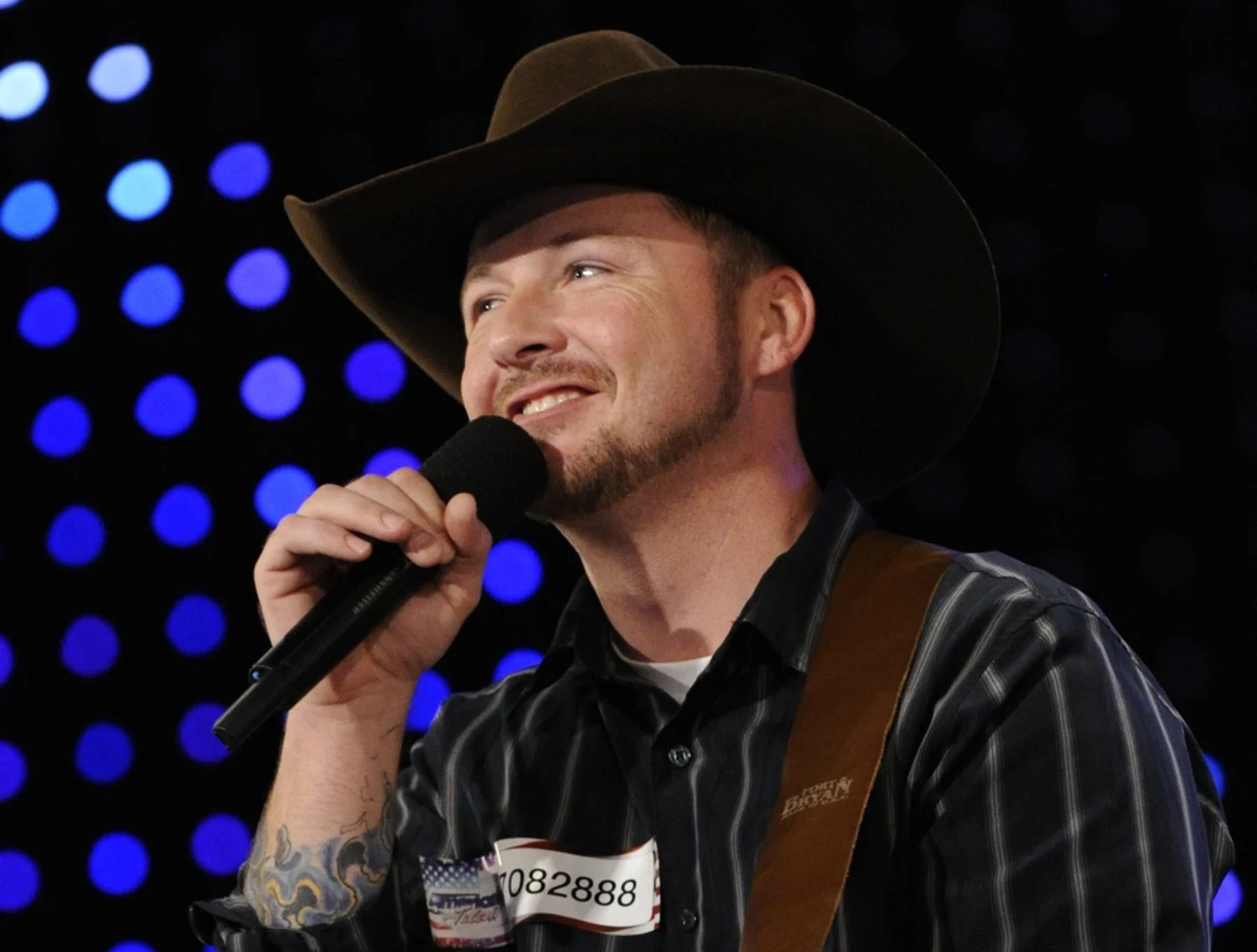
When Tim Poe walked onto the stage of America’s Got Talent, nobody in the audience could have predicted the emotional moment that was about to unfold.
Tim wasn’t just another contestant chasing fame. He was a U.S. military veteran with a powerful and painful story. After serving 14 years in the military, his life was permanently changed in 2009 when he was injured in Afghanistan during combat. A grenade blast left him with a broken back and a severe brain injury, and from that moment on, he developed a noticeable stutter that affected his speech every single day.
Speaking was a struggle. Confidence was even harder. But stepping onto that stage took a level of courage most people can’t imagine.
When he introduced himself, his voice was hesitant and broken by stutters. The room grew quiet, not knowing what to expect. But then came the moment that completely shifted everything.
Tim began to sing “If Tomorrow Never Comes.”
And something extraordinary happened.
The stutter disappeared.
His voice transformed instantly into something smooth, controlled, and deeply emotional. The contrast shocked everyone watching. The same man who struggled to speak a sentence was now delivering a powerful, soulful performance filled with clarity and feeling.
What made it even more remarkable was how natural it felt. There were no vocal tricks, no performance gimmicks—just pure emotion and a voice that seemed to carry everything he had been through.
Tim later explained that he discovered singing during speech therapy, where his therapist encouraged him to use melody as a way to help manage his condition. What started as rehabilitation turned into something far more meaningful—a way to reconnect with the world.
The judges of America’s Got Talent, including Howard Stern, watched in complete admiration. What they saw wasn’t just talent—it was resilience, healing, and human strength expressed through music.
By the end of the performance, the emotion in the room was undeniable. Respect filled the theater as the audience responded with overwhelming support, and the judges gave him a unanimous “yes” to continue in the competition.
This wasn’t just an audition. It was a moment that showed how music can break barriers that words cannot. A veteran who once struggled to speak had found a new voice—one that didn’t stutter, but inspired.