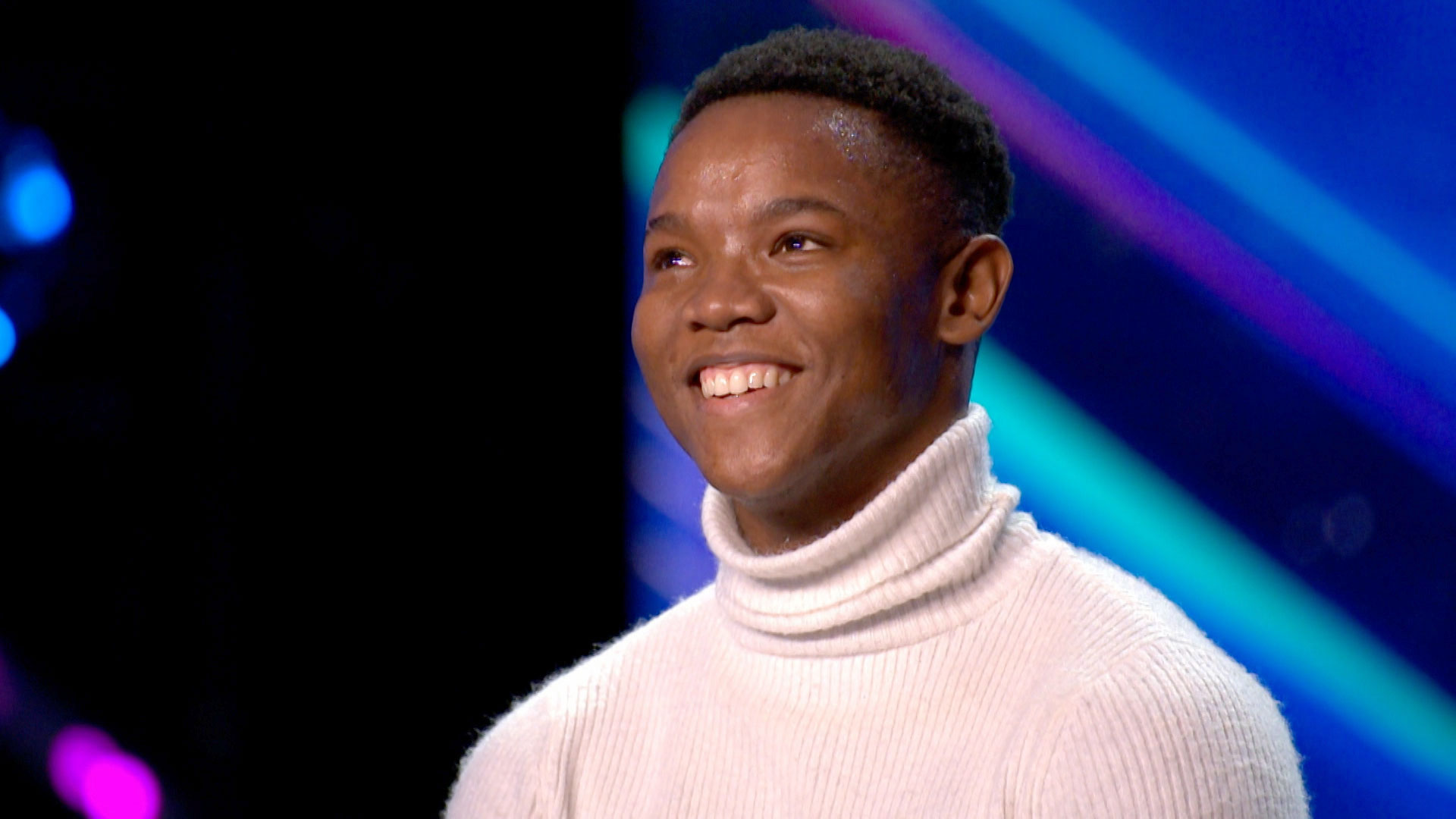
When Musa Motha stepped onto the stage of Britain’s Got Talent, the audience had no idea they were about to witness one of the most emotional and history-making performances ever seen on television.
Musa’s story alone was powerful. As a young boy, he lost one leg after battling cancer. For many, that kind of life-changing moment would have meant limits, restrictions, and silence. But Musa chose something completely different—he chose movement. He chose dance.
And what he brought to the stage wasn’t just a performance… it was a statement.
The moment the music started, the entire atmosphere shifted.
Every movement Musa made carried meaning. Using crutches not as support, but as an extension of his body, he created a style of dance that felt completely new—fluid, emotional, and powerful beyond expectation. It wasn’t about what he had lost. It was about everything he had built from it.
The audience quickly fell silent, completely locked in. His control, his timing, and his emotional expression turned the stage into something more like storytelling than performance. Every step felt intentional. Every motion felt like defiance against limitation itself.
And then came the moment no one saw coming.
As his performance reached its peak, the energy in the room exploded into emotion. The judges were visibly moved, some holding back tears, as the audience rose to their feet in a powerful standing ovation that seemed to last forever.
What happened next made history.
In an extraordinary reaction, the audience’s emotion and demand for recognition contributed to a moment that felt bigger than the competition itself—a collective Golden Buzzer-style celebration that symbolized unity, admiration, and respect for what they had just witnessed.
It wasn’t just approval. It was recognition of something historic.
Musa didn’t just perform on Britain’s Got Talent—he redefined it.
By the time golden confetti filled the air, Musa Motha had transformed from a contestant into a global symbol of resilience, courage, and artistic power. His journey from a cancer survivor to a history-making performer resonated far beyond the stage.
This wasn’t just dance.
It was proof that the human spirit can move even when everything else says it can’t.


